
'Raising the entire amount in one go may not be prudent, given the market dynamics.'

Five companies have submitted resolution plans for Jaiprakash Associates Ltd (JAL), the flagship company of the beleaguered Jaypee group, the company has said in a stock exchange filing. The Adani group, Vedanta, Jindal Steel & Power, Dalmia Bharat, and PSP Projects are the final bidders and the offers range from Rs 10,000 crore to Rs 11,000 crore, said a source close to the development.

Around 74 per cent rural households expect their incomes to increase in the next one year, according to a bimonthly survey conducted by the National Bank for Agriculture and Rural Development (Nabard) in May 2025. The percentage recorded was 72 in March.

At a time when the finance ministry is focusing on addressing employee grievances, the number of employees in most public-sector banks (PSBs) has declined over the last three financial years.

The raids were linked to a sophisticated organised investment fraud scheme targeting unsuspecting individuals through fake mobile apps and WhatsApp groups.

'Although we are facing constraints related to lending and resource mobilisation, the government is aware of these.'

The revised ceiling will be within the Rs 10 lakh mark.

After the merger of regional rural banks (RRBs) under the "One State, One RRB" policy to improve their efficiency and minimise competition among public-sector banks (PSBs) that sponsor them, the government is planning to list at least five RRBs by the end of financial year 2026-27 (FY27). After the latest amalgamation that came into effect on May 1, there are 28 RRBs in 26 states and two Union Territories (UTs), with more than 22,000 branches covering 700 districts.
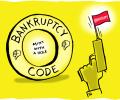
As much as 60 per cent of all resolution plans under Insolvency and Bankruptcy Code (IBC) were approved in the last three years alone, with over 30,000 cases having an underlying default of Rs 13.8 trillion getting settled even before admission, according to data till December 2024 released by the Insolvency and Bankruptcy Board of India (IBBI).
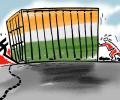
'We believe that in the new world order FTAs or bilateral trade agreements (BTAs) are the way forward.' 'They are enablers for our participation in global value chains. Today, around 70 per cent of global trade is tied to these chains.'

A decline in the initiation of the corporate insolvency process last year is spurring most Big Four firms to rethink and rejig their insolvency verticals to focus on business beyond Insolvency and Bankruptcy Code (IBC), industry experts said. Between the June and December quarter of FY25, the number of insolvency applications initiated by financial creditors went down from 150 to 84.

'AI analyses body language, etiquette, and communication skills, providing an in-depth performance matrix and a ranking system to help employees identify areas of improvement.'

The prospect of protracted uncertainties in the global economic landscape not only pose a risk for India's growth outlook in 2025-26, but are also likely to dent the private sector's capital raising and investment plans, the finance ministry averred on Tuesday, cautioning the country's corporates that the era of 'easy pickings' was over.

The government is considering initiating a probe by the Serious Fraud Investigation Office (SFIO) against Gensol Engineering and its promoters, according to sources familiar with the matter. "It is under consideration at this stage. A final decision will be taken soon," a government official said.

To enable Indian banks and financial institutions to develop an aircraft-leasing ecosystem at GIFT City, the Ministry of Civil Aviation has sought support from the Ministry of Finance. It has also raised concern over slow progress in developing aircraft leasing in India.

Form ITR-B allows the assessee to claim TDS (tax deducted at source) and TCS (tax collected at source) credit against undisclosed income.

Dividends paid by central public-sector enterprises (CPSEs) in 2024-25 are set to be the highest ever, with the government receiving 69,873 crore so far. A government official said he was hopeful the receipts would touch 70,000 crore in the last week of the financial year.

Payments banks have urged the Union finance ministry to increase their deposit limit for each account to Rs 5 lakh, according to a source who participated in a meeting, chaired by the Department of Financial Services Secretary M Nagaraju, in New Delhi. At present, they can accept deposits of up to Rs 2 lakh.

Geopolitical tensions, trade policy uncertainties, volatility in international commodity prices and financial market uncertainties pose considerable risks to India's economic growth in the coming year, the finance ministry cautioned on Wednesday. "Global trade continues to be affected by uncertainty in the policy environment... tariff-related developments in multiple countries have heightened trade-related risks, affecting investment and trade flows globally.

This marks a 67% increase from the Rs 2,537 crore lost in scams in 2022-2023.
 © 2026 Rediff.com - Advertise with us - Disclaimer - Privacy Policy - Sitemap - Feedback - About us - Terms of use - Grievances